ECOLOGICAL EDUCATION focuses on research and practice in teaching and learning about the environment, sustainability, and biodiversity. The section emphasizes educational programs, tools, and approaches that build ecological literacy, foster responsible environmental behavior, and link scientific knowledge with social and policy perspectives. Contributions highlighting innovative methods, public engagement, or capacity building at all levels are particularly relevant.
7th Congress of Ecologists of the Republic of Macedonia
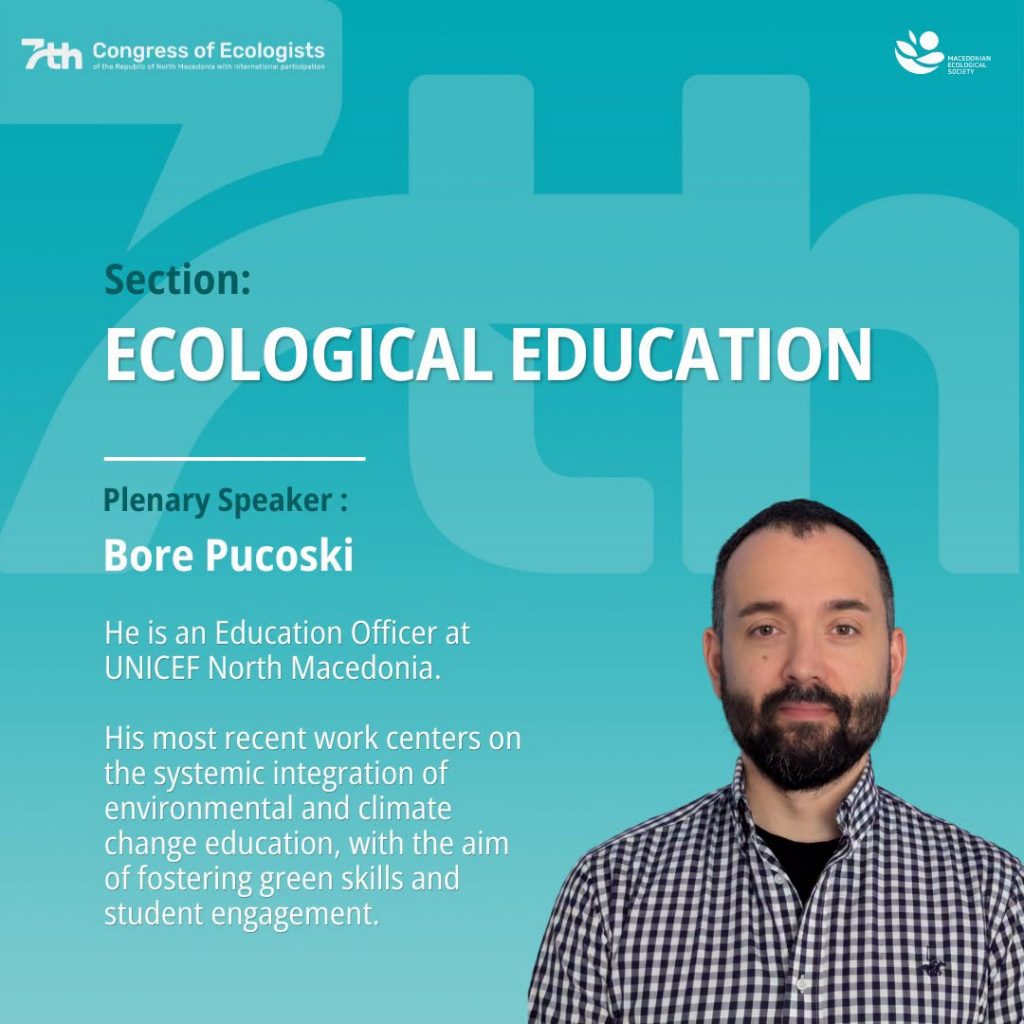
Plenary Speaker: Bore Pucoski
Bore Pucoski is an Education Officer at UNICEF North Macedonia, with a background in psychology and a strong focus on evidence-based education reform. His most recent work centers on the systemic integration of environmental and climate change education, supporting the alignment of curriculum, learning standards, teachers’ professional development, and experiential learning programmes to foster green skills and student engagement. At UNICEF, he works on advancing quality, equity, and innovation in education through policy development, partnerships, and data-informed programming.
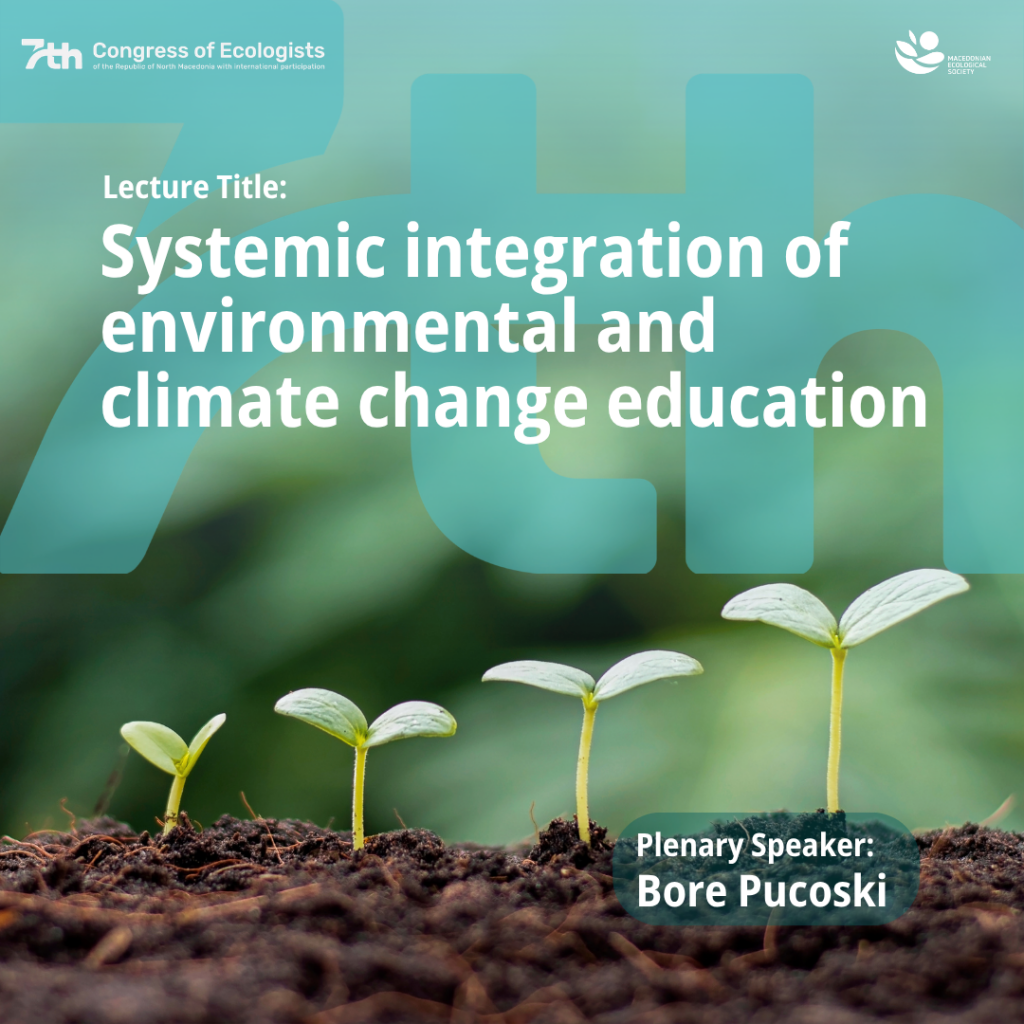
Lecture title: Systemic integration of environmental and climate change education
How can environmental and climate change education be integrated within the national education system so to foster curiosity, experiential learning, and competencies in natural sciences among students?
This session will outline a comprehensive, whole-system approach in which environmental content is embedded across curricula, learning standards, policy frameworks, teacher professional development, and high-quality teaching and learning resources.
But the model extends beyond formal education to include experiential learning opportunities, extracurricular programs, and partnerships with public institutions and civil society, forming a coherent ecosystem for the development of green skills.
Aligning with national priorities and relevant international commitments, environmental education becomes a continuous and inclusive process, equipping children and adolescents with the knowledge, skills, and agency to actively engage in environmental sustainability, climate action, and informed decision-making.