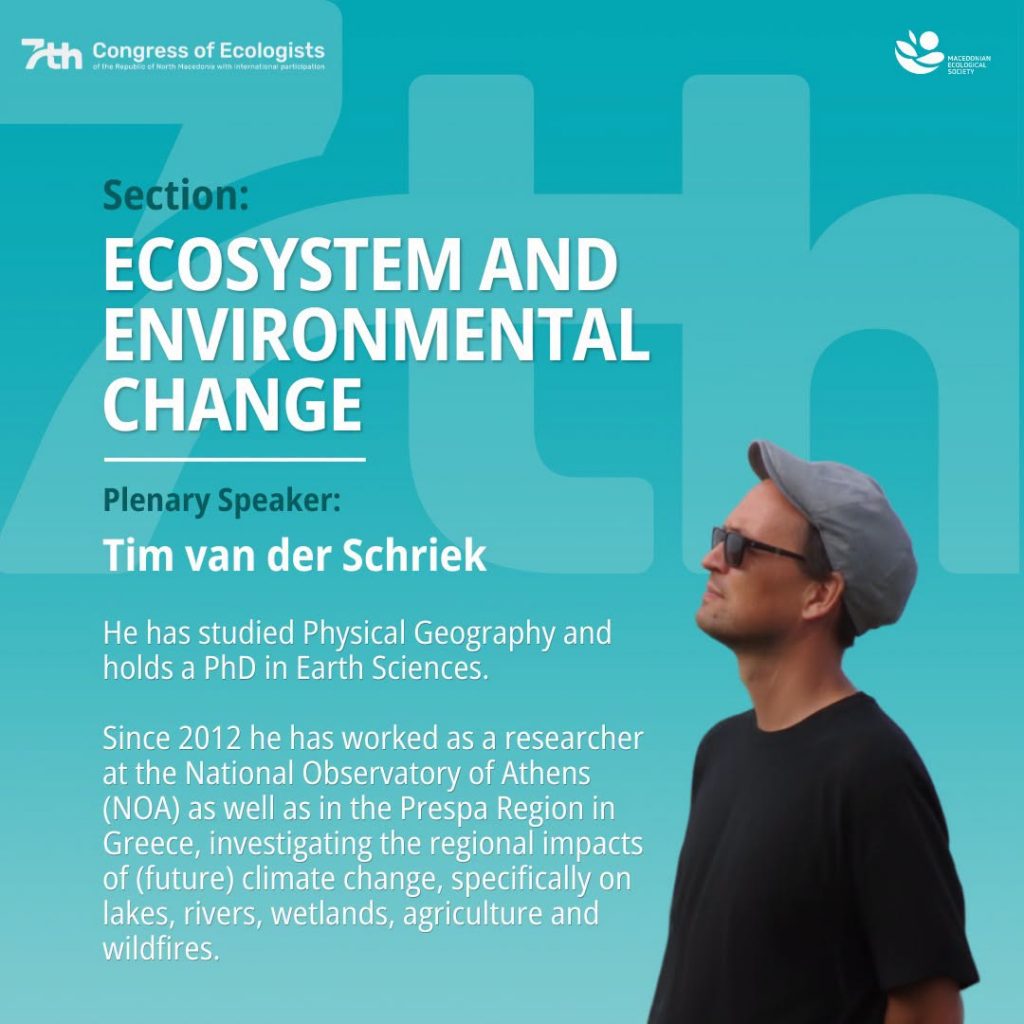
ECOSYSTEMS AND ENVIRONMENTAL CHANGE integrate the study of both natural and social causes and consequences of change, or social and policy processes that deal with challenges arising from environmental change. Themes include, but are not restricted to, the drivers, consequences and management of changes in: biodiversity and ecosystem services, climate, land use and land cover, populated areas, food and water resources.
Ecosystems and Environmental Change explores the interactions between natural and social drivers, their impacts on ecosystems, including the social, economic, and policy processes that address emerging environmental challenges. Hence, this section provides a platform for studies linking scientific understanding of ecosystems with practical approaches to support sustainable development in a rapidly changing world and covers the causes, consequences, and management of changes across multiple domains. The focus is on research into ecosystem responses, resilience, and adaptation strategies, including work that integrates ecological, social, and policy perspectives or develops innovative solutions to address environmental change.
Plenary Speaker: Tim van der Schriek
Tim van der Schriek studied Physical Geography (MSc, Vrije Universiteit, the Netherlands) and holds a PhD in Earth Sciences (Newcastle University, UK). His research focuses on geomorphology and climate change. He was a lecturer at Newcastle University, until he moved to Greece in 2012 where he became a researcher at the National Observatory of Athens (NOA) studying climate change impacts, including on nature and agriculture.
His research is published in numerous scientific papers and presented at many international conferences. He has been working since 2012 in Prespa, investigating the regional impacts of (future) climate change, specifically on: lakes, rivers, wetlands, agriculture and wildfires.
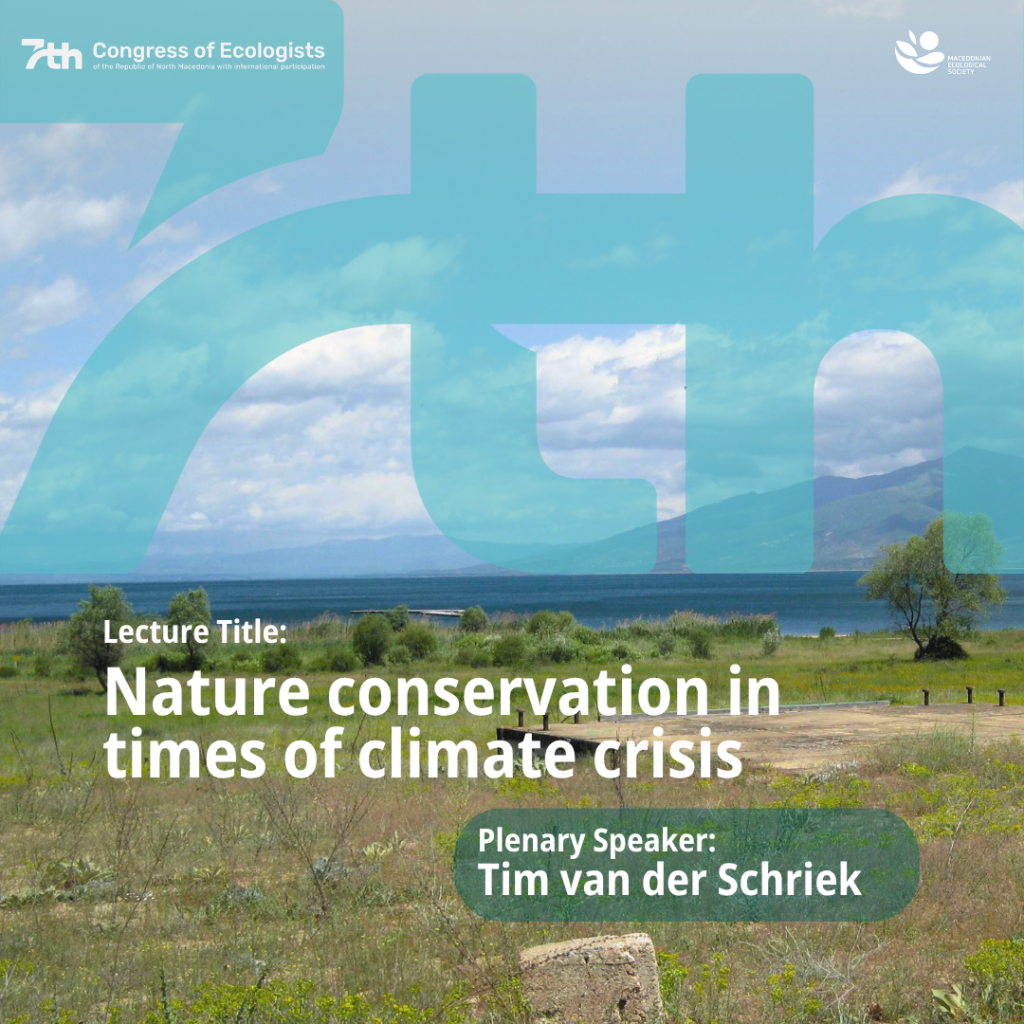
Lecture title: Nature conservation in times of climate crisis
The Southern Balkans are a global climate change hotspot, with average temperatures rising faster than the global averages. Projections indicate an increase in heatwaves while annual snow cover will decrease substantially. There may be an increase in extreme rainfall events, leading to a higher frequency of flash floods, as well as an increase in drought events and evaporation. This will lead to decreasing river flow and lake levels. Thus, freshwater environments, often biodiversity hotspots, are extremely threatened throughout the Balkans.
We are now living though times of great ecological crises due to climate change and other negative consequences of the multiplying human footprint. During past periods of abrupt climate change, species migrated and often survived in climate refugia. However, the highly fragmented present-day landscape does not favor such migration which is key to survival.
Radical new approaches to conservation management are required, that involve dynamic ecosystem protection, allowing migration through corridors that connect landscape elements. Lakes, wetlands and rivers with riparian forests are natural arteries that connect different parts of the landscape, both vertically and horizontally. These environments are thus of great importance for supporting biodiversity under abrupt climate change and deserve intensive protection efforts, including their physical functioning.